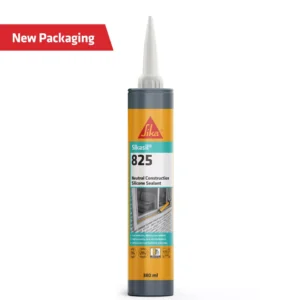
Spring is the busiest time of year for bathroom renovations. Whether you are a tiler, a builder, or a property manager refreshing a wet room, choosing the right silicone sealant from the start saves time, prevents callbacks, and produces a finish that holds up long-term. This guide covers everything you need to know about bathroom sealants, from the different product types to the details that separate a reliable seal from one that fails within months.
What makes a good bathroom sealant
A bathroom is a demanding environment. Surfaces are subject to constant moisture, temperature changes, and the expansion and contraction that comes with them. A sealant that works well in a dry interior application will not necessarily perform in a wet room or around a bath edge.
The key properties to look for in a bathroom sealant are flexibility, adhesion, and mould resistance. Flexibility matters because bathroom surfaces move. Even a perfectly fitted bath will flex slightly when it fills with water, and a rigid sealant will crack under that movement rather than accommodate it. A good silicone sealant will stretch and recover without losing its bond.
Adhesion determines how well the product bonds to the surfaces either side of the joint. In a bathroom, that typically means ceramic tiles, acrylic or enamel bath panels, UPVC frames, and sometimes glass. The sealant needs to adhere to all of these without lifting at the edges, which is where most early failures begin.
Mould resistance is the third factor, and in many ways the most visible one. A bathroom sealant that is not formulated with an antifungal agent will discolour within weeks in a high-moisture environment. Mould growth in the joint is not just unsightly. It is a hygiene issue, and once it takes hold it is very difficult to remove without stripping the sealant completely and starting again.
Acetoxy vs neutral cure silicone
The two main types of silicone sealant are acetoxy cure and neutral cure. Understanding the difference helps you choose the right product and avoid adhesion problems.
Acetoxy cure silicone releases acetic acid as it cures, which gives it the characteristic vinegar smell. It produces a very strong bond and cures quickly, which makes it a practical choice on many standard bathroom applications. However, the acetic acid released during curing can react with certain materials, including some metals, marble, and natural stone. On those surfaces, it can cause staining or corrosion, so it is not the right choice for every job.
Neutral cure silicone cures without releasing acetic acid, making it suitable for a wider range of surfaces including natural stone, polished metals, concrete, and coated glass. It is the safer choice when you are unsure about surface compatibility, and it is the standard recommendation for any application where the substrate is reactive or porous.
For standard ceramic tile and acrylic bathroom applications, acetoxy silicone is typically sufficient and often more cost-effective. For anything involving natural materials, go neutral cure. You can browse both types in our silicones and sealants range.
Sanitary vs general purpose
Within those categories, bathroom sealants are usually sold as either sanitary or general purpose. Sanitary sealants are specifically formulated for wet environments. They contain biocide additives that inhibit mould and mildew growth, which extends the life of the seal and keeps it looking clean in a way that a standard silicone simply will not.
For any bathroom application, specifying a sanitary-grade sealant is the professional standard. The cost difference is marginal, and the performance difference over a period of months is significant. A general purpose silicone might do the job initially, but it will not hold its appearance in a bathroom environment and will typically need replacing much sooner.
Colours and matching
Most bathroom sealants are available in a range of standard colours including white, magnolia, grey, anthracite, and clear. For trade work, it is worth checking the tile or panel colour before ordering and using a matched or complementary sealant rather than defaulting to white on every job.
Clear silicone is useful in specific situations, particularly around glass or mirrored surfaces where a coloured bead would be visible and intrusive. It is also commonly used around frameless shower enclosures. However, clear sealant shows residue and staining more readily than pigmented products, so it is not always the right call in high-use environments.
Where bathroom sealant is used
The most common applications in a bathroom are the bath-to-wall joint, the shower tray perimeter, the joint between wall tiles and the floor, and around any fixed fixtures such as basins, WC units, and vanity units.
Each of these applications has slightly different demands. The bath edge joint sees significant movement and needs a sealant with high elongation properties. The shower tray perimeter needs strong waterproofing and good adhesion to both ceramic and the tray material, which is often acrylic or stone resin. Floor-to-wall joints need flexibility to handle any building movement without cracking.
For all of these, a sanitary silicone that meets the flexibility and adhesion requirements already discussed will cover the job. The main variable is colour and finish, which should be chosen to match the overall scheme.
Surface preparation
No sealant performs well on a poorly prepared surface. This is the step that most failures trace back to, and it is worth taking seriously even on straightforward jobs.
The joint must be clean, dry, and free from dust, grease, and any old sealant residue. Any remaining trace of an old bead will prevent proper adhesion. A UPVC or silicone remover tool and a dedicated glass and UPVC cleaner make this job significantly easier and more thorough than trying to do it with a blade alone.
Once the joint is clean, ensure the surface is fully dry before applying the new sealant. In a bathroom that has been in use, this can take longer than expected. A wet joint will prevent the sealant from bonding properly and will lead to lifting or blistering.
Application and finishing
Apply the sealant in a single continuous bead without stopping. Start at one end of the joint and maintain consistent pressure on the gun throughout. An inconsistent bead is much harder to finish neatly and is more likely to trap air.
Once the bead is laid, tool it off with a wet finger or a dedicated finishing tool in a single smooth pass. Tooling presses the sealant into the joint and creates the concave profile that sheds water rather than collecting it. Wipe away any excess immediately before it skins.
Most sanitary silicones are fully cured within 24 hours in normal conditions. Some products specify a longer cure time, and it is worth checking the data sheet before handing the bathroom back to use.
Where to buy bathroom sealant for trade
For trade quantities, ordering from a specialist supplier rather than a builder’s merchant makes sense on both price and range. At The Mastic Shop, we stock a full range of silicone sealants and sanitary products from trusted brands including Sika Everbuild, Bond It, and Genesis, at wholesale pricing with nationwide delivery.
Browse our full sealants range to find the right product for your next project, or get in touch with our team if you need advice on product selection.